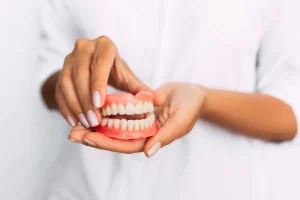
When a dentist recommends dentures, the first questions most people have are straightforward: what types are available, which one is right for me, and what will it cost? Those are the right questions to start with. The answers depend on how many teeth are missing, what your bone structure looks like, and how much stability and permanence you want from the final result.
At Ocean Breeze Implant & Esthetic Dentistry in Boynton Beach, Dr. Nicholas Goetz takes a comprehensive approach to denture planning. As a fellowship-trained maxillofacial prosthodontist — one of approximately 150 in the United States — Dr. Goetz evaluates not just which denture type fits your mouth today, but how your bone structure, bite, and long-term oral health are best protected over time.
How Do I Know If I Need Dentures?
Dentures are typically recommended when a patient has lost multiple teeth — or all teeth — in one or both arches. The diagnostic process begins with a comprehensive exam that includes updated x-rays and an evaluation of remaining teeth, gum tissue, and jaw bone. Signs that may indicate you are a candidate for dentures include significant tooth loss, loose teeth that cannot be saved, severe gum disease affecting multiple teeth, or difficulty chewing and speaking due to missing teeth. Your provider will review all available options, including implant-supported restorations, before recommending a treatment plan.
Types of Dentures: A Complete 2026 Breakdown
Modern dentures range from simple removable plates to implant-anchored permanent restorations. Understanding the differences helps you have a more informed conversation with your prosthodontist and set realistic expectations for cost, comfort, and function.
Full (Complete) Dentures
Full dentures replace all of the teeth in the upper or lower arch and rest directly on the gum tissue. They stay in place through suction and, for some patients, denture adhesive. Traditional full dentures are the most accessible starting point from a cost perspective and can restore basic chewing function and facial appearance. Because they rest on tissue rather than bone, however, they transmit only about 20 to 30 percent of natural chewing force — and their fit gradually changes as the jawbone remodels over time, typically requiring relining every one to three years.
Partial Dentures
Partial dentures replace a section of missing teeth when some healthy natural teeth remain. They clip onto adjacent teeth using metal clasps or precision attachments and can be removed for cleaning. Cast-metal partials are the most durable option; flexible nylon partials (such as Valplast) offer a more comfortable, metal-free alternative with a gum-colored base that blends with surrounding tissue. Partial dentures prevent neighboring teeth from shifting into the gap and are generally less expensive than full arch solutions.
Immediate Dentures
Immediate dentures are fabricated before teeth are extracted and placed the same day as the extractions, so the patient is never without teeth during recovery. They serve as an interim solution while gum tissue heals and the jawbone reshapes. Because the bone changes significantly in the months following extraction, immediate dentures require relining after six to twelve months — a cost that should be factored into the overall investment when comparing options.
Implant-Retained Removable Dentures (Snap-In Dentures)
Implant-retained overdentures clip onto two to four dental implants placed in the jawbone, providing dramatically better stability than conventional removable dentures. They can still be removed for cleaning at home, but the implant connection eliminates the slipping and rocking that many conventional denture wearers experience. Because the implants integrate with the jaw bone, this option also helps slow the bone loss that accelerates with traditional removable dentures. Our page on implant-supported dentures covers this option in greater detail, and our Boynton Beach dental implants page walks through the full implant process from evaluation through placement.
Fixed Implant Dentures (All-on-4 and Full-Arch Implants)
Fixed implant dentures are permanently anchored to four or more implants and cannot be removed by the patient. They function more like natural teeth than any other denture option, restoring approximately 70 to 90 percent of natural chewing force. Because the prosthesis is screwed directly to the implants, there is no slipping, no adhesive, and no nightly removal required. Our All-on-4 page and our guide to full arch dental implants cover the surgical and restorative process in detail. This option carries the highest upfront cost but typically delivers the longest lifespan and best functional outcome.
Flexible Dentures
Flexible dentures — sometimes called Valplast or nylon dentures — use a thermoplastic base material rather than rigid acrylic. The flexible base conforms more naturally to gum tissue, making them comfortable and well-tolerated by many patients. They are metal-free, which eliminates visible clasps, and are often used for partial dentures covering a limited number of teeth. The tradeoff is that flexible materials can accumulate bacteria more readily than rigid acrylic and may need more frequent professional cleaning.
What Materials Are Dentures Made Of?
The base of a denture — the pink portion that simulates gum tissue — is most commonly fabricated from acrylic resin, though cast-metal frameworks are used in certain partial denture designs. The artificial teeth themselves may be acrylic or porcelain, with porcelain offering better durability and a more natural appearance at a higher cost. Digital manufacturing has significantly advanced the precision of modern dentures: using 3D scanning technology, dentures can be designed and milled from digital data rather than traditional physical impressions, producing a more accurate fit with fewer adjustment visits.
How Much Do Dentures Cost in 2026?
Denture costs vary considerably based on the type, material tier, and whether implant support is involved. The following ranges reflect current 2026 pricing benchmarks from published cost studies and practice data. All pricing is per arch unless otherwise noted.
- Economy full dentures: $500 – $1,200 per arch — basic acrylic, functional but less refined fit and appearance
- Standard full dentures: $1,500 – $2,500 per arch — improved materials, better color matching, more precise fit
- Premium / custom full dentures: $2,000 – $3,600 per arch — most lifelike appearance, custom characterization, often digitally fabricated
- Partial dentures (resin base): $1,300 – $3,300 per arch
- Partial dentures (cast metal): $1,700 – $4,200 per arch — more durable framework, better long-term stability
- Flexible (nylon) partial dentures: $1,000 – $2,500 per arch
- Immediate dentures: $1,800 – $3,000 per arch, plus $300 – $600 for relining as gums heal
- Snap-in implant-retained overdentures: $3,000 – $7,300 per arch (denture portion only; implant costs are separate)
- Fixed All-on-4 implant dentures: $8,000 – $15,000+ per arch — the most comprehensive, longest-lasting solution
These ranges reflect the denture itself. Additional costs — extractions, bone grafting if needed, x-rays, relining, and follow-up adjustments — can add meaningfully to the total depending on the condition of your mouth at the start of treatment.
Does Dental Insurance Cover Dentures?
Most dental PPO plans cover dentures as a major restorative procedure, typically paying 40 to 50 percent of the allowed amount after the deductible. Annual maximums of $1,000 to $2,500 often cap how much the insurance pays in a single year, which can leave a meaningful out-of-pocket balance for more comprehensive options. Implant-supported dentures are frequently subject to separate implant coverage rules, so reviewing your specific plan before treatment is essential.
Original Medicare does not cover dentures, though some Medicare Advantage plans provide partial or full coverage. HSA and FSA funds can be applied to denture expenses as an IRS-eligible medical cost. Our financial information page details the financing and payment options available at Ocean Breeze Implant & Esthetic Dentistry, and our guide to in-network vs. out-of-network coverage walks through how PPO benefits apply when seeing an out-of-network provider.
Frequently Asked Questions About Dentures
How long does it take to get dentures?
The process from initial consultation to final fitting typically takes four to eight weeks for conventional removable dentures, depending on how many preparatory procedures are needed. Immediate dentures can be placed the same day as extractions, though they will need relining several months later as the gums heal. Implant-supported options involve a longer timeline because the implants require several months to fully integrate with the jawbone before the final prosthesis is attached.
How long do dentures last?
Traditional removable dentures generally last five to eight years with proper care, though the fit will change sooner as the jawbone remodels — typically requiring relining every one to three years. Premium custom dentures with higher-quality materials may last longer before replacement is needed. Implant-supported dentures, because the implants stabilize bone volume, tend to maintain a better fit over a longer period and can last ten or more years with appropriate maintenance.
Will dentures affect how I eat and speak?
There is an adjustment period of two to eight weeks for most new denture wearers. During that time, starting with softer foods cut into smaller pieces is recommended, and some words may feel awkward to pronounce. Most patients adapt well within the first month. Implant-supported dentures significantly reduce the adjustment period because they are stable and do not shift during chewing or speaking.
Are implant-supported dentures worth the additional cost?
For patients who qualify, implant-supported dentures offer meaningful functional and health advantages beyond conventional removable options. They transmit considerably more chewing force, do not slip, and help preserve jawbone density — which conventional dentures cannot do. The higher upfront cost is often offset over time by reduced need for adhesives, relines, and replacements. A thorough evaluation of your bone volume and overall health is needed to determine whether implants are a viable option for your situation.
Can dentures be made to look natural?
Yes. Modern dentures — particularly digitally fabricated premium options — can be made to closely match the appearance of natural teeth in terms of color, shape, and proportion. The quality of the dental lab and the level of customization significantly affect how natural the final result looks. At Ocean Breeze Implant & Esthetic Dentistry, Dr. Goetz works with high-quality lab partners to achieve results that blend with each patient’s facial features and existing bite.
Schedule Your Denture Consultation in Boynton Beach
The right denture solution is not one-size-fits-all — it depends on your bone structure, your remaining teeth, your functional goals, and your long-term oral health. Dr. Nicholas Goetz has the prosthodontic and maxillofacial training to evaluate all of those factors together and recommend a treatment plan that addresses the full picture, not just the immediate gap.
When you are ready to explore your options, we invite you to contact our Boynton Beach office to schedule a consultation. We will review your imaging, walk you through every option, and help you make a decision that serves your health, function, and confidence for years to come.