
Prosthodontic treatments covered by most insurance plans
Se Habla Español | Falamos Português
The ear is one of the most anatomically complex structures on the human face, and one of the most visible. When cancer surgery, trauma, or a congenital condition results in partial or total ear loss, the impact on daily life and self-image is significant. A custom auricular prosthesis, a silicone ear fabricated and color-matched to the patient’s anatomy, restores both appearance and confidence. At Ocean Breeze Implant Aesthetic Dentistry in Boynton Beach, Dr. Nicholas Goetz designs and delivers auricular prostheses as a fellowship-trained maxillofacial prosthodontist, one of approximately 150 in the United States with this credential.

An auricular prosthesis is a custom-fabricated, patient-specific artificial ear made from medical-grade silicone. It is designed to replicate the natural shape, color, and surface texture of a human ear and is retained either with medical adhesive or osseointegrated implants placed in the temporal bone. Auricular prostheses are used when surgical ear reconstruction is not appropriate, not desired, or has not produced the desired esthetic outcome.
The ear is one of the most anatomically detailed structures on the face, making auricular prosthesis fabrication among the most technically demanding forms of maxillofacial prosthetic work. According to the Journal of Prosthodontics, implant-retained auricular prostheses demonstrate significantly better retention and patient satisfaction than adhesive-retained alternatives. At Ocean Breeze Implant Aesthetic Dentistry, Dr. Goetz evaluates each patient’s anatomy, medical history, and lifestyle to determine whether adhesive or implant retention is the appropriate approach, then fabricates the prosthesis with the detail and artistry that a visible facial structure requires.
Porcelain veneers are thin ceramic shells, typically 0.3 to 0.5mm, custom-fabricated to bond to the visible front surface of a tooth. They are a minimally invasive solution for patients who want to improve appearance without significant tooth reduction. The porcelain material resists staining, reflects light naturally, and integrates with surrounding teeth in a way that composite alternatives cannot replicate long-term.
Veneers are well-suited for correcting a wide range of cosmetic concerns, including tooth discoloration that doesn’t respond to whitening, chips or cracks affecting the front teeth, minor gaps between teeth, teeth that appear uneven in length or shape, and worn enamel that has changed the look of your smile. According to the American Dental Association, candidates should have good underlying gum health and sufficient enamel before placement, Dr. Goetz evaluates both before recommending any veneer treatment.
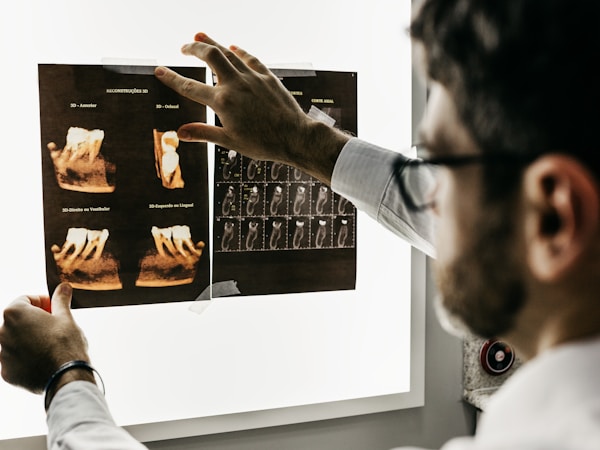
The two primary retention methods for auricular prostheses are medical-grade silicone adhesive and osseointegrated implants. The right choice depends on the extent of the defect, available bone at the temporal site, skin condition, radiation history, and the patient’s ability to manage daily adhesive application. Dr. Goetz evaluates each of these factors before making a recommendation.
Adhesive-retained auricular prostheses are secured using medical-grade silicone adhesive applied to the skin around the defect site each morning and removed each evening. This approach requires no surgery and is appropriate for patients who are not candidates for implant placement due to radiation history, available bone, or personal preference. Adhesive-retained prostheses are more susceptible to displacement in humid conditions, perspiration, swimming, and high heat, and typically require replacement every one to two years as the silicone pigmentation fades.
Implant-retained auricular prostheses attach to osseointegrated titanium fixtures placed in the temporal bone adjacent to the defect. Bar or magnet attachment systems connect the prosthesis to the implants, providing secure retention that does not rely on daily adhesive. Implant-retained prostheses are more stable in all conditions, easier to seat and remove, and typically last longer than adhesive-retained alternatives because the silicone is not exposed to daily adhesive contact. Eligibility requires adequate bone volume at the temporal site and, for patients who have received radiation, a clinical assessment of bone viability for implant osseointegration.
Auricular prosthesis fabrication begins with detailed impressions of the defect site and documentation of the contralateral ear, which serves as the mirror reference for shape and proportion. A wax sculpture is fabricated and evaluated at a try-in appointment for anatomical accuracy and margin blending before processing begins. The final prosthesis is hand-sculpted in medical-grade silicone with intrinsic pigmentation layered throughout and extrinsic tinting applied at the surface, producing the translucency and depth of natural skin rather than a painted, uniform appearance.
With proper daily care, an auricular prosthesis typically remains in acceptable condition for one to three years. Pigmentation fades gradually with exposure to light and cleaning, and the silicone material eventually loses its elasticity. Implant-retained prostheses generally last longer than adhesive-retained ones. Dr. Goetz monitors prosthesis condition at follow-up appointments and recommends replacement before degradation becomes noticeable to others. A replacement prosthesis is fabricated from new impressions to account for any tissue changes at the defect site since the previous fabrication.

Auricular prosthesis fabrication demands both clinical precision and significant artistry. Dr. Nicholas Goetz completed his Maxillofacial Prosthodontics Fellowship at UCLA, where extraoral prosthetics \u2014 including auricular, nasal, and orbital prostheses \u2014 are a core component of the training curriculum alongside care for head and neck cancer patients.
Dr. Goetz holds a DMD and MS from the University of Florida, where he completed his Prosthodontic Residency. He is one of approximately 150 maxillofacial prosthodontists in the United States, with clinical experience at U.S. Army and VA Medical Hospital settings where complex facial rehabilitation cases were routine. For Boynton Beach patients facing ear loss from any cause, that background means the prosthesis is designed by a clinician trained specifically for this work \u2014 not adapted from general restorative dentistry.
We believe financial concerns shouldn’t keep you from treatment that can change your daily life. Ocean Breeze Implant Aesthetic Dentistry offers flexible financing options so the path to a complete smile feels manageable from the very first visit.
While we are not in-network with insurance companies, we’ll still help you get the most out of your plan. We file claims on your behalf and assist you in securing any reimbursement your PPO plan allows.

Candidates include patients who have lost part or all of the ear due to cancer surgery, those born with microtia or anotia, and individuals who have experienced traumatic ear loss from injury or accident. Dr. Goetz evaluates the extent of the defect, available tissue and bone, medical history, and patient lifestyle before recommending an approach.
With proper daily care, an auricular prosthesis typically remains in good condition for one to three years. Fading of surface pigmentation and gradual silicone degradation are the primary causes of replacement. Implant-retained prostheses typically last longer. Dr. Goetz monitors prosthesis condition at follow-up appointments and advises on replacement timing before change becomes visible.
Implant retention offers significantly better stability, especially in humid conditions, during physical activity, and for patients who have difficulty managing daily adhesive application. For patients with adequate temporal bone and no contraindications from radiation, Dr. Goetz typically recommends implant retention as the preferred long-term solution. Adhesive retention remains appropriate for patients who are not implant candidates or who prefer to avoid surgery.
Radiation to the temporal area affects bone vascularity and can reduce the reliability of implant osseointegration. Dr. Goetz evaluates radiation history, field location, and total dose before recommending implants for patients who have received head and neck radiation. In some cases, a period of hyperbaric oxygen therapy may be recommended before and after implant placement to support healing in irradiated bone.
Auricular prostheses are often covered under medical insurance when the ear loss resulted from cancer surgery, trauma, or a documented congenital condition. Submit to both your dental and medical plans. Ocean Breeze Implant Aesthetic Dentistry is a fee-for-service practice and participates as an out-of-network provider with PPO plans, our team files claims on your behalf. Flexible financing options are also available.
Dr. Goetz is one of approximately 150 maxillofacial prosthodontists in the United States, a specialist whose UCLA fellowship training included extraoral prosthetics for patients affected by cancer, trauma, and congenital conditions. Patients come to Ocean Breeze Implant Aesthetic Dentistry from throughout Palm Beach County and surrounding communities for custom auricular prosthetic care that is not available at most general dental practices.
Schedule your consultation at our Boynton Beach office today, or call (561) 265-1998 to speak with our team.
Se Habla Español · Falamos Português
**Requested time is not final until you receive confirmation from our office. Please do not submit any Protected Health Information (PHI).
"*" indicates required fields