
Prosthodontic treatments covered by most insurance plans
Se Habla Español | Falamos Português
The loss of an eye or the entire orbital contents following cancer surgery is among the most significant changes a patient can face in both appearance and daily life. A custom orbital prosthesis, a silicone restoration of the eye, eyelid, and surrounding orbital structures, restores the appearance of the socket with a level of realism that allows patients to engage in daily life without the self-consciousness that follows enucleation or exenteration. At Ocean Breeze Implant Aesthetic Dentistry in Boynton Beach, Dr. Nicholas Goetz designs and delivers orbital prostheses as a fellowship-trained maxillofacial prosthodontist, one of approximately 150 in the United States with this credential.

An orbital prosthesis is a custom-fabricated silicone restoration of the eye socket and surrounding structures, designed for patients who have undergone enucleation (surgical removal of the eye) or exenteration (removal of the eye and orbital contents). The prosthesis restores the appearance of the eye \u2014 including a hand-painted iris matched to the natural eye \u2014 along with the surrounding eyelid and periorbital soft tissue in cases of more extensive surgery.
Orbital prosthetic rehabilitation is recognized as a standard component of care following orbital cancer surgery. According to the National Cancer Institute, head and neck cancer treatment can significantly alter facial appearance, and prosthetic rehabilitation supports quality of life during cancer survivorship. At Ocean Breeze Implant Aesthetic Dentistry, Dr. Goetz evaluates each patient’s orbital defect, available retention options, and the extent of surrounding tissue involvement before designing a prosthesis that achieves the most natural possible appearance at social distances.
Porcelain veneers are thin ceramic shells, typically 0.3 to 0.5mm, custom-fabricated to bond to the visible front surface of a tooth. They are a minimally invasive solution for patients who want to improve appearance without significant tooth reduction. The porcelain material resists staining, reflects light naturally, and integrates with surrounding teeth in a way that composite alternatives cannot replicate long-term.
Veneers are well-suited for correcting a wide range of cosmetic concerns, including tooth discoloration that doesn’t respond to whitening, chips or cracks affecting the front teeth, minor gaps between teeth, teeth that appear uneven in length or shape, and worn enamel that has changed the look of your smile. According to the American Dental Association, candidates should have good underlying gum health and sufficient enamel before placement, Dr. Goetz evaluates both before recommending any veneer treatment.
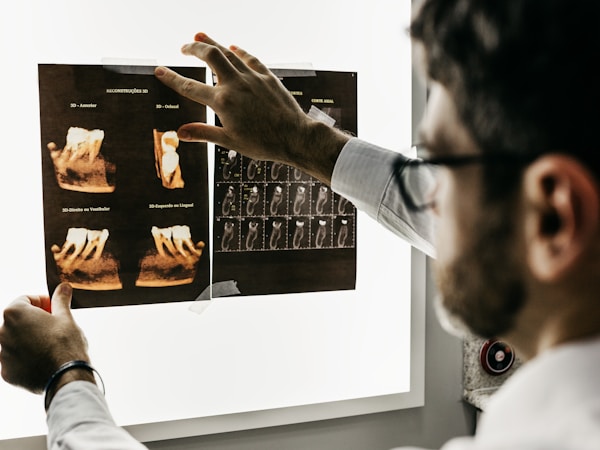
Orbital prostheses can be retained with medical-grade silicone adhesive or osseointegrated implants placed in the orbital rim. The appropriate retention method depends on the extent of the surgical resection, available bone in the orbital rim, radiation history, skin and soft tissue condition, and patient dexterity. Dr. Goetz evaluates each of these factors at the initial consultation before recommending an approach.
Adhesive-retained orbital prostheses are secured with medical-grade silicone adhesive applied to the skin around the orbital rim each morning. No surgery is required, and this approach is appropriate for patients who are not implant candidates or who prefer to avoid additional surgery. The prosthesis must be removed and cleaned daily, and the skin at the margins requires careful care to prevent irritation. Adhesive-retained orbital prostheses typically require replacement every one to two years as silicone pigmentation fades.
Implant-retained orbital prostheses attach to osseointegrated fixtures placed in the orbital rim, providing secure and consistent retention through bar or magnet attachment systems. Implant retention eliminates daily adhesive management, reduces skin irritation, and provides more stable prosthesis positioning during daily activities. For patients with adequate orbital rim bone and no implant contraindication from radiation, implant retention is generally the preferred approach for long-term orbital rehabilitation.
Achieving a natural appearance with an orbital prosthesis depends heavily on how accurately the iris color, pupil size, scleral tone, and vascular patterning of the prosthetic eye match the contralateral eye. Dr. Goetz documents the natural eye in detail and hand-paints the prosthetic iris and sclera to replicate these features as closely as possible. The surrounding silicone eyelid and skin tones are matched using the same intrinsic and extrinsic pigmentation layering process used in other extraoral prostheses.
Some patients require rehabilitation of the orbit alongside adjacent facial structures, for example, following an exenteration that also removes the eyelid, adjacent cheek skin, or part of the nasal bridge. In these cases, Dr. Goetz designs a combined prosthesis that addresses multiple zones in a single integrated silicone unit, or sequences individual prostheses to correspond with the patient’s surgical and radiation recovery timeline. Combined orbital prosthetics are among the most technically demanding cases in maxillofacial prosthetic work, and Dr. Goetz’s UCLA fellowship training specifically included this type of complex multi-zone rehabilitation. See our facial prosthetic rehabilitation page for more on combined cases.

Orbital prosthesis fabrication demands a combination of clinical training and fine artistry that very few practitioners possess. Dr. Nicholas Goetz completed his Maxillofacial Prosthodontics Fellowship at UCLA, where orbital prosthetics \u2014 including hand-painting prosthetic eyes and fabricating combined orbital and facial prostheses for patients following extensive cancer surgery \u2014 is a core component of the fellowship curriculum.
Dr. Goetz holds a DMD and MS from the University of Florida, where he completed his Prosthodontic Residency. He is one of approximately 150 maxillofacial prosthodontists in the United States, with clinical experience at U.S. Army and VA Medical Hospital settings where orbital and facial rehabilitation cases were part of routine care. For Boynton Beach patients facing orbital reconstruction, that background means the prosthesis is designed by a clinician whose training specifically included this work.
We believe financial concerns shouldn’t keep you from treatment that can change your daily life. Ocean Breeze Implant Aesthetic Dentistry offers flexible financing options so the path to a complete smile feels manageable from the very first visit.
While we are not in-network with insurance companies, we’ll still help you get the most out of your plan. We file claims on your behalf and assist you in securing any reimbursement your PPO plan allows.

Candidates include patients who have undergone enucleation (surgical removal of the eye) or exenteration (removal of the eye and surrounding orbital contents) due to cancer, trauma, or other medical conditions. Patients for whom surgical orbital reconstruction has not been performed or has not achieved the desired result are also appropriate candidates. Dr. Goetz evaluates the defect, available bone, radiation history, and skin condition before recommending an approach.
With proper daily care, an orbital prosthesis typically remains in good condition for one to three years before pigmentation fades visibly or the silicone degrades. The prosthetic eye component may be refurbished or replaced independently of the surrounding silicone in some cases. Dr. Goetz monitors prosthesis condition at follow-up appointments and advises on replacement timing.
For patients with adequate orbital rim bone and no radiation contraindication, implant retention generally provides better stability, more consistent positioning, and less daily management than adhesive retention. Dr. Goetz evaluates each patient’s bone volume using CBCT imaging before recommending implant placement. Adhesive retention remains appropriate for patients who are not implant candidates or who prefer to avoid additional surgery.
Radiation to the orbital region affects bone vascularity and can reduce implant osseointegration reliability at the orbital rim. Dr. Goetz reviews radiation field location, total dose, and time elapsed since treatment before recommending implants for patients with a radiation history. Hyperbaric oxygen therapy before and after implant placement may be recommended in some cases to support healing in irradiated bone.
Orbital prostheses are often covered under medical insurance when orbital loss resulted from cancer surgery or trauma. Submit to both your dental and medical plans. Ocean Breeze Implant Aesthetic Dentistry is a fee-for-service practice and participates as an out-of-network provider with PPO plans, our team files claims on your behalf. Flexible financing options are also available.
Dr. Goetz is one of approximately 150 maxillofacial prosthodontists in the United States, with fellowship training at UCLA that specifically included orbital and other extraoral prosthetics for patients affected by cancer, trauma, and congenital conditions. Patients come to Ocean Breeze Implant Aesthetic Dentistry from throughout Palm Beach County and surrounding communities for orbital prosthetic care that requires this level of specialist training.
Schedule your consultation at our Boynton Beach office today, or call (561) 265-1998 to speak with our team.
Se Habla Español · Falamos Português
**Requested time is not final until you receive confirmation from our office. Please do not submit any Protected Health Information (PHI).
"*" indicates required fields