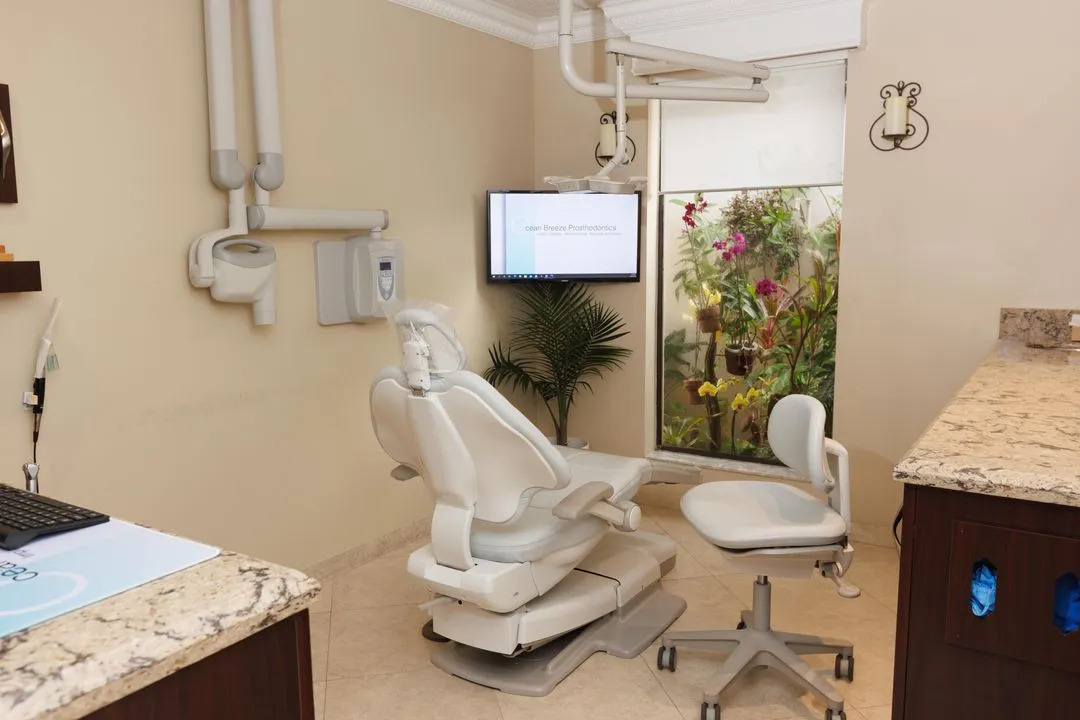
Missing several teeth but still having healthy ones remaining puts you in an important clinical category — one where a removable partial denture may restore your ability to chew, speak, and smile confidently without requiring the more extensive treatment of a full arch replacement. Understanding whether you are a good candidate, what the fitting process involves, and how to care for the appliance long-term helps you go into treatment with realistic expectations and make the most of your investment.
At Ocean Breeze Implant Aesthetic Dentistry in Boynton Beach, Dr. Nicholas Goetz evaluates each patient’s bone structure, bite, and remaining dentition before recommending any prosthetic solution. As a fellowship-trained maxillofacial prosthodontist — one of approximately 150 in the United States — Dr. Goetz brings a level of restorative expertise that goes beyond fitting a standard appliance. Every partial denture recommendation is made with your long-term oral health, not just the immediate gap, in mind.
Are You a Candidate for a Removable Partial Denture?
A removable partial denture (RPD) is appropriate when a patient has lost multiple teeth in one arch but still has enough healthy natural teeth remaining to support the appliance. Those remaining teeth serve as anchors — the RPD attaches to them using metal clasps or precision attachments, stabilizing the prosthetic in place during chewing and speaking. You may be a good candidate if one or more of the following apply to your situation.
Patients with periodontal disease should have that addressed before an RPD is placed, as gum health directly affects how well the appliance fits and how long the supporting teeth remain viable anchors.
What to Expect During the Fitting Process
Removable partial denture fabrication typically requires four to six appointments over several weeks. The process is more involved than placing a single restoration, and each step is important for achieving a comfortable, well-fitting result.
Removable Partial Denture Cost in 2026
The cost of a removable partial denture varies based on the material, the number of teeth being replaced, and the complexity of the framework design. The table below reflects 2026 market data across U.S. dental practices, priced per arch.
| Cast Metal | Flexible (Nylon) | Acrylic (Flipper) | |
|---|---|---|---|
| Cost (per arch) | $1,700 – $4,200 | $1,000 – $2,500 | $300 – $1,200 |
| Best For | Long-term wear, maximum stability | Metal allergies, comfort priority | Temporary use only |
| Lifespan | 7–10+ years with relining | 5–7 years | Months to 1–2 years |
| Clasps Visible? | Metal clasps (precision attachments available) | Gum-colored, metal-free | Pink acrylic base, wire clasps |
Additional costs may include preparatory procedures such as tooth extractions, treatment for gum disease, or crown placement on anchor teeth to improve the RPD’s fit and stability. Most dental PPO plans cover a portion of partial denture costs as major restorative work, typically 40 to 50 percent of the allowed amount after the deductible. Our financial information page outlines the payment and financing options available at our Boynton Beach practice.
How to Care for Your Removable Partial Denture
A well-maintained partial denture lasts longer, fits better, and protects the health of your remaining natural teeth. According to the National Institute of Dental and Craniofacial Research, proper daily care is the single most important factor in denture longevity. The following habits make a meaningful difference.
Remove and rinse the appliance after every meal to clear food debris before it hardens. Brush the partial denture daily with a soft-bristled brush and a nonabrasive denture cleaner — standard toothpaste is too abrasive and will scratch the acrylic surface over time, creating areas where bacteria can accumulate. When the appliance is not in your mouth, store it in water or a denture-soaking solution to prevent the material from drying out and warping. Remove the partial at night to allow your gum tissue to rest. Continue brushing your natural teeth and gum tissue twice daily, paying particular attention to the areas around the anchor teeth where plaque accumulates more readily. Schedule regular dental checkups so Dr. Goetz can verify fit, assess the health of the anchor teeth, and make any adjustments before a poor fit causes soft tissue irritation or bone changes.
When to Consider Upgrading to Implant-Supported Options
A removable partial denture is an excellent starting point for many patients, but it is not always the permanent endpoint. As the jawbone continues to remodel in areas where teeth are missing, the fit of a conventional RPD gradually changes — typically requiring relining every one to three years and replacement every five to eight years. Patients who find that their partial denture is shifting, causing sore spots, or limiting their diet may benefit from a conversation about implant-retained alternatives.
Even one or two strategically placed dental implants can dramatically improve the stability of a partial denture by giving it a fixed anchor point rather than relying entirely on the remaining natural teeth. Our Boynton Beach dental implants page covers the evaluation and placement process in detail, and our guide to implant-supported dentures explains how implant anchoring changes the function and longevity of a prosthetic.
Types of Removable Partial Dentures
Not all removable partial dentures are built the same way, and the type your provider recommends depends on your arch anatomy, how many teeth are missing, and where the gaps fall. The three main types differ in material, durability, appearance, and cost.
Upper vs. Lower Partial Dentures
Upper (maxillary) partial dentures typically have a palatal connector that spans the roof of the mouth, giving the framework more surface area for support. Lower (mandibular) partial dentures rely more heavily on the anchor teeth since the tongue occupies the floor of the mouth — making fit and stability slightly more challenging. Dr. Goetz evaluates both arch anatomy and anchor tooth condition together before recommending a framework design.
Partial Dentures for Front Teeth
Front tooth replacement places higher aesthetic demands on the prosthetic. Clasps visible near the front of the mouth are often a concern, which is why flexible nylon partials or precision-attachment cast metal designs are frequently recommended for anterior gaps. An acrylic flipper is commonly used as an interim solution while a more permanent option — such as a dental implant or a fixed bridge — is being evaluated or fabricated.
Pros and Cons of Removable Partial Dentures
Removable partial dentures offer a meaningful functional and cosmetic benefit for most patients, but like any prosthetic solution, they come with trade-offs worth understanding before treatment begins.
Frequently Asked Questions About Removable Partial Dentures
How long does it take to get a removable partial denture?
From the initial consultation to final delivery, the process typically takes four to six weeks. This includes time for impressions, laboratory fabrication of the framework and artificial teeth, a try-in appointment, and any adjustments before the final appliance is delivered. Patients who need preparatory work — extractions, gum treatment, or crown placement on anchor teeth — should factor in additional time before the RPD process begins.
How long does a removable partial denture last?
Cast-metal partial dentures are the most durable option and can last seven to ten years or longer with proper care, though relining is typically needed every two to three years as the jawbone remodels. Acrylic and flexible partial dentures have shorter lifespans and are more prone to fracture. The health of the anchor teeth is ultimately the limiting factor — if those teeth deteriorate, the partial may need to be redesigned or replaced earlier than expected.
Will a partial denture affect my speech?
Some patients notice a slight change in how certain sounds are produced during the first few weeks of wearing a new partial denture, particularly sounds that require the tongue to contact the roof of the mouth. This adaptation period is normal and resolves for most patients within two to four weeks as the tongue and lips adjust. Practicing reading aloud at home during the first few days helps speed the process.
Can I eat normally with a removable partial denture?
Most patients can return to a fairly normal diet within a few weeks of adapting to their partial denture. Starting with softer foods during the first week and gradually reintroducing harder or chewier items is recommended. Avoiding very sticky or extremely hard foods protects both the appliance and the anchor teeth from excessive stress. Cutting food into smaller pieces and chewing on both sides of the mouth distributes force more evenly.
What is the difference between a flipper and a cast-metal partial?
A flipper is a lightweight, acrylic-only appliance typically used as a temporary solution while a permanent restoration is being planned or fabricated. It is the least expensive option but also the least durable, less comfortable for long-term wear, and more prone to breakage. A cast-metal partial denture uses a rigid metal framework that distributes chewing force more evenly across the arch, provides better long-term stability, and generally lasts considerably longer with proper care. For most patients looking for a long-term removable solution, cast-metal is the preferred choice.
Schedule a Partial Denture Consultation at Ocean Breeze Implant Aesthetic Dentistry
The right prosthetic choice depends on how many teeth you have lost, the condition of your remaining teeth and bone, your functional goals, and your long-term oral health priorities. Dr. Nicholas Goetz completed his specialty prosthodontic residency at the University of Florida and his Maxillofacial Prosthodontics Fellowship at UCLA, giving him the advanced training to evaluate all of those factors together and recommend a solution that serves your health well beyond the initial fitting.
When you are ready to take the next step, we invite you to contact our Boynton Beach office to schedule a consultation. We will review your imaging, walk you through every available option, and help you move forward with a plan that restores your confidence and your ability to eat, speak, and smile comfortably.