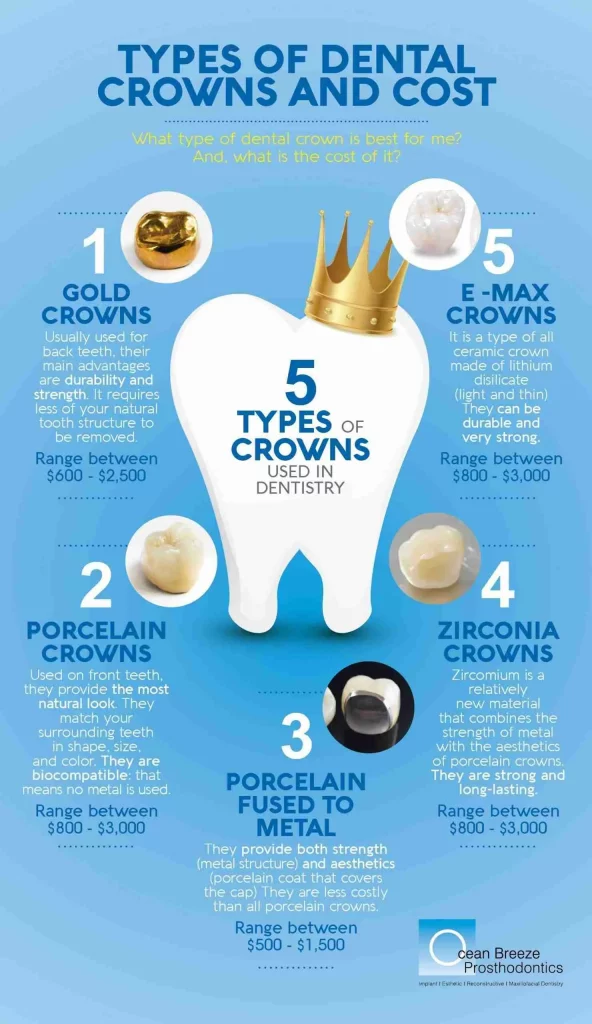
Choosing the right dental crown can feel overwhelming when you are already dealing with a damaged, decayed, or sensitive tooth. Understanding the types of dental crowns available and what each one costs in 2026 puts you in a much stronger position before you ever sit down in the dental chair. Each material has unique strengths, and the right fit depends on factors like tooth location, your bite force, and your budget.
At Ocean Breeze Prosthodontics, Dr. Nicholas Goetz brings fellowship-level maxillofacial prosthodontic training to every crown case at our Boynton Beach practice. Whether you are replacing a failing restoration, protecting a tooth after a root canal procedure, or covering a dental implant, the goal is the same: a restoration that performs well and looks completely natural for years to come.
What Is a Dental Crown?
A dental crown is a tooth-shaped cap cemented over a damaged or compromised tooth to restore its shape, strength, and function. Dental crowns are one of the most commonly placed restorations in the United States, addressing problems that range from severe decay to fractures to cosmetic concerns. Because the crown fits over your entire tooth from the gumline upward, it protects the remaining structure while restoring how the tooth looks and bites.
When Do You Need a Dental Crown?
Common reasons a crown may be recommended include several distinct clinical scenarios. A thorough exam with updated imaging helps confirm whether a crown is the right approach versus more conservative options like inlays and onlays, which preserve more natural tooth structure when less coverage is needed.
The Main Types of Dental Crowns
There are several crown materials used today, and each one behaves differently in terms of durability, esthetics, and price point. The table below summarizes the key distinctions to help set realistic expectations before treatment begins.
Dental Crown Cost in 2026: By Material
Crown cost depends primarily on the material chosen. The following ranges reflect current 2026 data compiled from ADA fee reports, FAIR Health, and published practice pricing. These are single-tooth estimates before any preparatory procedures.
- PFM (porcelain-fused-to-metal): $800 – $2,000 per tooth — the most affordable tooth-colored permanent option
- All-porcelain / all-ceramic: $1,000 – $2,000 per tooth — popular for front teeth needing excellent color matching
- Zirconia: $1,200 – $2,500 per tooth — the most versatile all-around option for front and back teeth
- E-max (lithium disilicate): $1,200 – $2,500 per tooth — premium esthetics for visible front teeth
- Gold / metal alloy: $900 – $2,500 per tooth — maximum durability, best for out-of-sight molars
With dental insurance, patients typically pay $500 – $900 out of pocket per crown after the insurer covers approximately 50% of the allowed amount for major restorative work. One crown can consume most or all of a plan’s annual maximum, so confirming your deductible, cap, and waiting period before scheduling is worthwhile.
Additional procedures billed separately — such as a core buildup ($150 – $500), post and core ($250 – $650), or root canal ($700 – $2,100) — are not included in the crown fee itself. Our dental crown cost guide covers the full breakdown of what affects total treatment investment.
A 2022 retrospective study published in the European Journal of Oral Sciences via PubMed Central analyzed over 1,000 single-unit crowns and confirmed that properly placed restorations demonstrate strong long-term survival rates — reinforcing the value of material selection and quality placement from the outset.
How Long Do Dental Crowns Last?
Most permanent crowns last between 10 and 15 years with proper care, and many last significantly longer. Gold and zirconia tend to perform at the top end of that range due to their exceptional resistance to wear and fracture. The factors that most affect crown longevity are oral hygiene practices, whether you grind your teeth, the quality of cement used at placement, and how well the margins were sealed. A nightguard is often recommended for patients who clench or grind to protect the restoration long-term.
What Happens During the Crown Procedure?
Crown placement typically requires two appointments, each with a clear purpose.
Veneers vs. Crowns: Key Differences
Dental veneers cover only the front-facing surface of a tooth and require far less enamel removal than a crown. They are ideal for teeth that are structurally sound but have cosmetic concerns — discoloration, minor chips, or shape irregularities. A crown is the appropriate choice when a tooth has structural damage, has undergone a root canal, or needs full-coverage protection. Our team can review imaging and help determine which approach is better suited to your specific tooth during a consultation. For a deeper comparison of how these two restorations differ structurally, see our guide to dental crowns vs. veneers.
Insurance, Financing, and In-Network vs. Out-of-Network
Understanding how dental insurance applies to crown treatment is as important as choosing the right material. Our blog on in-network vs. out-of-network dental care walks through how coverage works and what to expect from your out-of-pocket costs depending on your plan type.
At Ocean Breeze Prosthodontics, we are not in-network with insurance companies, but we file PPO claims on your behalf and assist in securing any reimbursement your plan allows. Financial options are also available to help make treatment more accessible. Visit our financial information page for details on payment options.
Frequently Asked Questions About Dental Crowns
How do I know which crown material is right for my tooth?
The best material depends on where the tooth is located and how much force it handles. For front teeth where appearance is the priority, all-ceramic, E-max, or layered zirconia tend to produce the most natural-looking results. For back molars that absorb heavy chewing force, full-contour zirconia or gold offers greater long-term durability. A thorough exam and imaging allow your provider to weigh those factors and make a recommendation that fits your specific bite and goals.
Is getting a crown painful?
The procedure itself is performed under local anesthesia, so discomfort during the appointment is minimal and comparable to a standard filling visit. Some mild sensitivity or soreness around the prepared tooth is common in the days following the appointment and typically resolves on its own within a week. If significant discomfort persists, it warrants a follow-up call to your dental team.
How long does a dental crown last?
Most permanent crowns last 10 to 15 years, and many last well beyond that range with proper care. Gold and full-contour zirconia tend to perform at the upper end due to their resistance to fracture and wear. Good oral hygiene, regular professional cleanings, and a nightguard for patients who grind are the main factors that extend crown longevity.
Does dental insurance cover crowns?
Most dental PPO plans classify crowns as a major restorative procedure and cover approximately 50% of the allowed amount after your deductible. Coverage applies when the crown is placed for a functional reason rather than a cosmetic one. Because a single crown can use most of a plan’s annual maximum, reviewing your deductible, benefit cap, and any waiting periods before scheduling is important. Our team files claims on your behalf and helps you understand your expected reimbursement.
What is the difference between a dental crown and a dental cap?
A dental crown and a dental cap are the same restoration — the terms are used interchangeably. Both refer to a custom-made tooth-shaped cover cemented over a prepared tooth to restore its shape, strength, and appearance. The word “cap” is an informal but accurate description of what a crown does: it caps the tooth from the gumline upward.
Schedule a Consultation at Ocean Breeze Prosthodontics
Knowing the types of dental crowns available and what influences their cost is a strong starting point, but finding the right fit for your specific tooth and goals requires a hands-on evaluation. Dr. Nicholas Goetz completed his dental education, master’s degree, and specialty prosthodontic residency at the University of Florida, followed by a Maxillofacial Prosthodontics Fellowship at UCLA. He is among fewer than 150 maxillofacial prosthodontists in the United States. Learn more about Dr. Goetz and his background.
When you are ready, we invite you to contact our Boynton Beach office to schedule a consultation. We will walk you through your options, review your imaging, and build a restoration plan that fits your priorities — whether that means the most natural-looking result, the longest-lasting material, or a solution that works within your budget.