Medically Reviewed by Dr. Nicholas Goetz, DMD on September 22, 2026
A good prosthodontist near you is one with verified specialty training, a track record with cases like yours, and clear answers about cost before treatment begins, not simply the closest office to your home.
Whether you have damaged or missing teeth, or you simply realize you are due for a checkup that turned into something more involved, finding the right specialist matters more than a quick search suggests. Here is a practical list of what to check before you commit to a prosthodontist near you.
1. Confirm You Actually Need a Prosthodontist
Prosthodontists are specialists with additional training in restoring teeth and maxillofacial tissues, and they also perform complex cosmetic procedures with predictable outcomes. Prosthodontics is one of nine dental specialties officially recognized by the ADA. Beyond the standard four years of dental school, prosthodontists complete an additional three years of focused residency training.
That extended education is most valuable for specific situations. If you are missing several teeth, need a full-mouth reconstruction, are considering implants, or have had restorative work elsewhere that did not hold up, a prosthodontist’s training is built for exactly that kind of case. For a single simple filling or a routine cleaning, a general dentist is usually the more practical choice.
2. Verify Board Certification and Training
Once you have narrowed your search, check the specialist’s actual credentials rather than taking a website’s word for it. Look for board certification, confirm where the provider completed residency training, and read what other patients say about their results. Members of the American College of Prosthodontists keep ongoing training current, and choosing an ACP-affiliated provider is one added layer of assurance about the quality of care you will receive.
It is also reasonable to ask to see before-and-after examples of cases similar to yours. A confident, established practice will have no hesitation sharing that kind of documentation.
3. Ask How Insurance, Cost, and Financing Actually Work
Insurance should not be the only factor in choosing a prosthodontist, but it is a fair question to ask early. Many prosthodontic treatments, such as implants, crowns, dentures, or bridges, are only partially covered by dental insurance, and coverage percentages vary widely by plan and by the type of plan you carry.
A trustworthy office will walk you through payment and financing options before any work begins, rather than surprising you with costs afterward. Choosing a provider based purely on the lowest quoted price can lead to complications that cost more to fix later, so weigh cost against training and track record together.
4. Pay Attention to How the Office Treats You
Your experience with the front desk and clinical team affects your care as much as the specialist’s technical skill. A well-run prosthodontic office typically:
- Answers questions clearly: Staff explain procedures and pricing in plain language, not jargon.
- Accommodates urgent needs: The team can fit you in when pain or a broken restoration cannot wait.
- Coordinates your records: Prior x-rays and history transfer smoothly to avoid repeat imaging.
- Sets realistic expectations: You receive a written estimate before treatment, not a verbal guess.
If a practice cannot deliver on these basics during your first phone call, that is worth noticing before you schedule anything.
5. Look at the Technology and Equipment in the Office
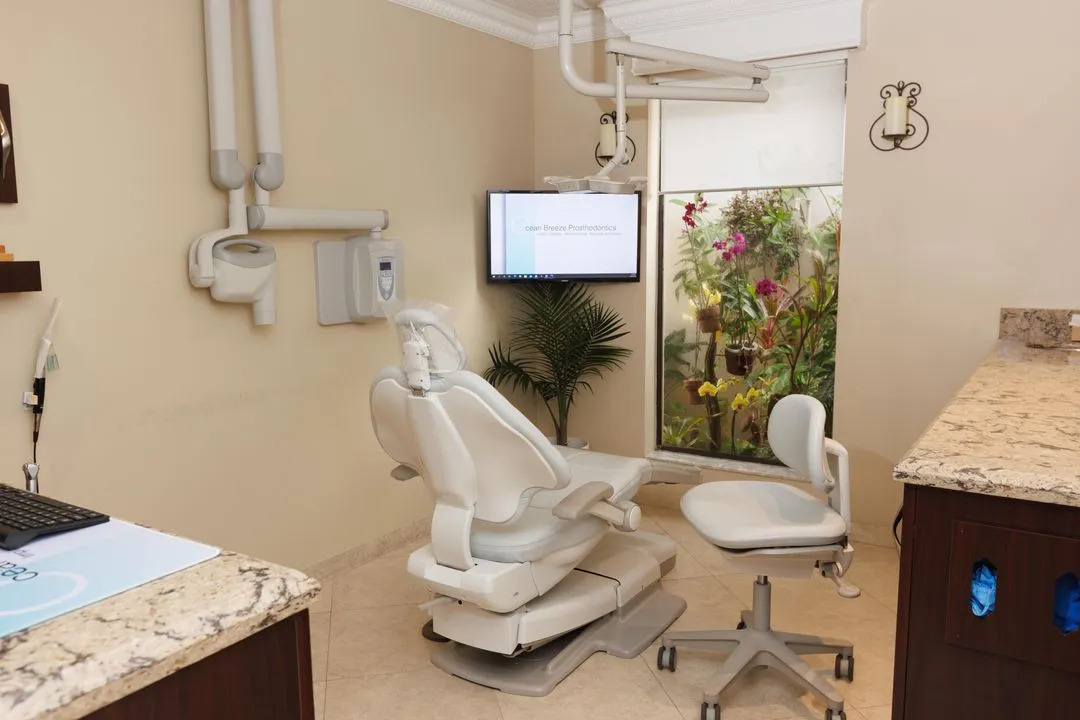
Prosthodontic treatment planning benefits enormously from modern imaging and digital workflows. Ask whether the office uses digital impressions, 3D imaging, or intraoral cameras to plan your case, since these tools generally translate into a more precise fit and fewer return visits for adjustments. An office still relying entirely on older analog methods is not automatically a poor choice, but it is a fair data point when you are comparing two otherwise similar practices.
6. Weigh Distance Against the Right Fit
Picking a specialist close to home or work makes it easier to keep appointments and attend any necessary follow-ups. If you are in Delray Beach, Boynton Beach, or Boca Raton, start your search locally. That said, for complex, multi-visit treatment plans, many patients find it is worth a slightly longer drive to work with a prosthodontist whose training and case history genuinely match their needs, rather than settling for the nearest option.
7. Consider Whether Whole-Body Health Factors Into Your Care
Some prosthodontic practices take a broader view of oral health, considering how nutrition, health habits, and biocompatible materials fit into your overall treatment plan. This approach is not necessary for every patient, but if you have specific material sensitivities or broader health concerns, it is a reasonable question to raise during your consultation. A practice willing to discuss these preferences openly, rather than dismissing them, is usually a good sign of how it will handle your care more broadly.
Putting the Checklist Together
No single factor on this list should carry all the weight. A prosthodontist with strong credentials but a disorganized front office, or a conveniently located practice with limited experience in your specific case, are both worth thinking through carefully. The strongest choice is usually the provider who checks most of these boxes at once: verified training, transparent pricing, modern technology, and a staff that treats your questions with patience rather than a script.
Frequently Asked Questions About Choosing a Prosthodontist
What is a prosthodontist, and how is it different from a general dentist?
A prosthodontist is a dental specialist who completes three additional years of training beyond dental school, focused on restoring and replacing teeth. General dentists handle most routine care well, while prosthodontists are trained specifically for complex cases such as full-mouth reconstruction, implants, and multi-tooth restorations.
How do I verify a prosthodontist’s board certification?
The American College of Prosthodontists maintains a directory of members and provides guidance on verifying board certification and training. Most reputable practices also list their credentials, residency program, and any fellowships directly on their website.
Does insurance typically cover prosthodontic treatment?
Coverage varies significantly by plan and procedure. Many dental PPO plans partially cover treatments like crowns, bridges, and dentures, though implants and cosmetic work are often covered less generously. A reputable practice will review your specific benefits before recommending a treatment plan.
How far should I be willing to travel to see a prosthodontist?
For straightforward cases, a nearby provider is usually the most practical choice. For complex, multi-visit treatment plans, many patients find it worthwhile to travel a bit further for a specialist whose training and case history closely match their specific needs.
What should I ask during a prosthodontist consultation?
Ask about the provider’s training and experience with cases similar to yours, request to see before-and-after examples, and get a clear written estimate covering cost, insurance, and financing before agreeing to treatment. A confident, established practice will answer all of these directly.
Does modern technology actually make a difference in prosthodontic treatment?
Yes, in many cases. Digital impressions and 3D imaging typically produce a more accurate fit for crowns, bridges, and implants, which can reduce the number of adjustment visits you need afterward. It is not the only factor that matters, but it is a reasonable question to raise when comparing two practices with similar credentials.
Choosing the right prosthodontist takes a little research, but it pays off in outcomes that last. If you are ready to talk through your options with a team trained specifically for complex restorative and implant cases, we would be glad to help.
Dr. Nicholas Goetz completed his prosthodontic residency at the University of Florida and a Maxillofacial Prosthodontics Fellowship at UCLA. Schedule a consultation with our Delray Beach and Boynton Beach team to see whether our practice is the right fit for your smile.
About the Author
Dr. Nicholas Goetz, DMD
Maxillofacial Prosthodontist
Dr. Goetz completed his specialty prosthodontic residency at the University of Florida and a Maxillofacial Prosthodontics Fellowship at UCLA. He leads restorative and implant care at Ocean Breeze Implant & Esthetic Dentistry, serving patients throughout Delray Beach and Boynton Beach.