
Prosthodontic treatments covered by most insurance plans
Se Habla Español | Falamos Português
Some patients are born with conditions that affect the development of the face, palate, jaw, or oral structures, conditions that, without intervention, compromise the ability to eat, speak, and live comfortably. Congenital defect rehabilitation through maxillofacial prosthodontics addresses these structural differences using custom prostheses and restorations designed for the specific anatomy each patient presents. At Ocean Breeze Implant Aesthetic Dentistry in Boynton Beach, Dr. Nicholas Goetz provides congenital defect rehabilitation as a fellowship-trained maxillofacial prosthodontist, one of approximately 150 in the United States with this credential.

Congenital defect rehabilitation is a branch of maxillofacial prosthetics focused on patients born with structural differences affecting the face, palate, jaw, or dentition. These conditions \u2014 ranging from cleft palate to congenital absence of teeth to underdevelopment of facial structures \u2014 often require a combination of prosthetic, restorative, surgical, and orthodontic care coordinated across multiple specialties and delivered in stages over years. The maxillofacial prosthodontist’s role is to address the functional and esthetic consequences of these conditions using prostheses and restorations tailored to the patient’s specific anatomy.
Congenital conditions affecting the oral and facial structures are recognized as requiring specialized prosthodontic management. According to the National Institute of Dental and Craniofacial Research, cleft lip and palate affect approximately 1 in 1,600 births in the United States and often require coordinated care involving multiple specialties. At Ocean Breeze Implant Aesthetic Dentistry, Dr. Goetz evaluates each patient’s current anatomy, prior treatment history, and functional priorities before developing a rehabilitation plan that addresses both immediate needs and long-term outcomes.
Porcelain veneers are thin ceramic shells, typically 0.3 to 0.5mm, custom-fabricated to bond to the visible front surface of a tooth. They are a minimally invasive solution for patients who want to improve appearance without significant tooth reduction. The porcelain material resists staining, reflects light naturally, and integrates with surrounding teeth in a way that composite alternatives cannot replicate long-term.
Veneers are well-suited for correcting a wide range of cosmetic concerns, including tooth discoloration that doesn’t respond to whitening, chips or cracks affecting the front teeth, minor gaps between teeth, teeth that appear uneven in length or shape, and worn enamel that has changed the look of your smile. According to the American Dental Association, candidates should have good underlying gum health and sufficient enamel before placement, Dr. Goetz evaluates both before recommending any veneer treatment.
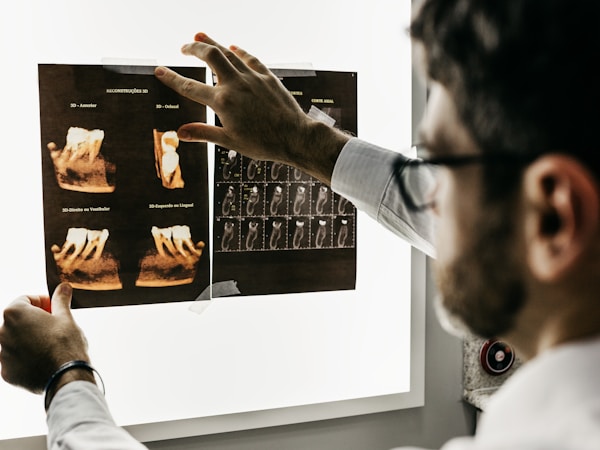
Congenital defect rehabilitation is never one-size-fits-all. The specific prosthetic and restorative approach depends on the nature and severity of the defect, the patient’s age and stage of development, any prior surgical intervention, and the functional goals of treatment. Dr. Goetz evaluates each patient individually and develops a rehabilitation plan that accounts for the current anatomy and anticipates how the treatment will need to evolve as the patient grows or as surgical stages are completed.
Cleft palate, an opening in the roof of the mouth present from birth, may be surgically repaired in infancy, but residual palatal defects, fistulas, or velopharyngeal insufficiency can persist into adulthood. Dr. Goetz fabricates obturators for patients with residual palatal openings that affect speech, swallowing, and nasal regurgitation of food and liquid. He also works with patients who have velopharyngeal insufficiency following cleft repair, using palatal lift or speech bulb prostheses to improve speech clarity without additional surgery.
Microtia (underdevelopment of the ear) and anotia (congenital absence of the ear) are conditions where surgical reconstruction is not always performed, not always successful, or not preferred by the patient or family. Custom auricular prostheses fabricated in medical-grade silicone provide a natural-appearing alternative that can be retained with adhesive or osseointegrated implants. Dr. Goetz evaluates each patient’s anatomy, bone development, and age before recommending a retention method.
Some congenital conditions affect the number, shape, or structure of teeth. Hypodontia and oligodontia (congenital absence of multiple teeth) require comprehensive restorative planning to restore function and appearance using implants, bridges, or removable prosthetics. Ectodermal dysplasia, dentinogenesis imperfecta, and amelogenesis imperfecta present with severely compromised tooth structure that requires full-mouth rehabilitation tailored to the specific material deficiency. Dr. Goetz evaluates each patient’s dentition and develops a staged treatment plan that addresses both function and aesthetics.
Many congenital defect rehabilitation patients have ongoing care relationships with oral surgeons, orthodontists, speech-language pathologists, and ENTs. Dr. Goetz participates in coordinated care planning with these teams, ensuring that prosthetic and restorative interventions are timed appropriately relative to surgical stages, orthodontic treatment, and growth milestones. For patients transitioning from pediatric specialty care to adult care, Dr. Goetz provides continuity and a comprehensive rehabilitation plan for the long term.

Congenital defect rehabilitation requires a clinician who can assess an anatomy that developed differently from birth, coordinate care across surgical and specialty disciplines, and design prosthetic and restorative solutions for structural variations that general dental training does not address. Dr. Nicholas Goetz completed his Maxillofacial Prosthodontics Fellowship at UCLA, where rehabilitation of patients with cleft palate, congenital facial anomalies, and developmental dental conditions is a standard component of the clinical curriculum.
Dr. Goetz holds a DMD and MS from the University of Florida, where he completed his Prosthodontic Residency. He is one of approximately 150 maxillofacial prosthodontists in the United States, with clinical experience at U.S. Army and VA Medical Hospital settings treating patients with complex oral and facial rehabilitation needs. For Boynton Beach patients with congenital conditions affecting the face, palate, or dentition, that background means rehabilitation is planned by a specialist trained for precisely this type of case.
We believe financial concerns shouldn’t keep you from treatment that can change your daily life. Ocean Breeze Implant Aesthetic Dentistry offers flexible financing options so the path to a complete smile feels manageable from the very first visit.
While we are not in-network with insurance companies, we’ll still help you get the most out of your plan. We file claims on your behalf and assist you in securing any reimbursement your PPO plan allows.

Common conditions treated include cleft palate with residual palatal defects or fistulas, velopharyngeal insufficiency following cleft repair, microtia and anotia, hypodontia and oligodontia, ectodermal dysplasia, dentinogenesis imperfecta, and amelogenesis imperfecta. If you have a congenital condition affecting the face, palate, jaw, or dentition that has not been fully addressed by prior care, a consultation with Dr. Goetz is the appropriate next step.
That depends on the condition and what has already been done. For residual palatal defects after cleft surgery, prosthetic obturation can be initiated as soon as the healing is stable. For dental anomalies, comprehensive restorative planning typically begins once the dentition is sufficiently developed, though interim prosthetics can address function earlier. For auricular prostheses in microtia patients, implant retention options are evaluated once sufficient bone has developed. Dr. Goetz advises on timing at the initial consultation based on current anatomy and any planned surgical or orthodontic work.
Yes. Dr. Goetz works alongside oral surgeons, orthodontists, ENTs, and speech-language pathologists who are already involved in a patient’s care. Coordinating with the existing care team is standard practice for congenital defect cases, the prosthetic and restorative plan is designed to complement surgical and orthodontic phases, not conflict with them.
Coverage depends on the condition, the specific treatment, and whether the condition is classified as medically necessary under your plan. Prosthetic rehabilitation for cleft palate, congenital ear absence, and dental anomalies associated with systemic conditions may qualify for medical insurance coverage in addition to dental. Ocean Breeze Implant Aesthetic Dentistry is a fee-for-service practice and files claims on your behalf with PPO dental and medical plans. Flexible financing options are also available.
Yes. Adult patients who have not had access to specialist care, who have aged out of pediatric programs, or who have residual functional issues from prior surgical repair that was never fully followed through prosthetically are appropriate candidates for evaluation. Congenital defect rehabilitation does not have a cutoff age, the functional needs addressed by maxillofacial prosthetics are relevant at any stage of life.
Dr. Goetz is one of approximately 150 maxillofacial prosthodontists in the United States, a specialist whose fellowship training at UCLA specifically included prosthetic and restorative rehabilitation for patients with congenital conditions affecting the face, palate, and dentition. Patients come to Ocean Breeze Implant Aesthetic Dentistry from throughout Palm Beach County and surrounding communities for this level of specialist care.
Schedule your consultation at our Boynton Beach office today, or call (561) 265-1998 to speak with our team.
Se Habla Español · Falamos Português
**Requested time is not final until you receive confirmation from our office. Please do not submit any Protected Health Information (PHI).
"*" indicates required fields