
Prosthodontic treatments covered by most insurance plans
Se Habla Español | Falamos Português
After oral cancer surgery removes part of the palate or upper jaw, the surgical obturator placed in the operating room is only the beginning. As the surgical wound contracts, swelling resolves, and tissue changes shape over the weeks that follow, a new prosthesis is needed, one designed to adapt to that healing anatomy and continue to function through radiation therapy or additional treatment. That prosthesis is the interim obturator. At Ocean Breeze Implant Aesthetic Dentistry in Boynton Beach, Dr. Nicholas Goetz fabricates and adjusts interim obturators throughout the healing phase as a fellowship-trained maxillofacial prosthodontist, one of approximately 150 in the United States with this credential.

An interim obturator is a custom-fabricated removable prosthesis that closes the opening in the palate or upper jaw left by cancer surgery, worn during the healing and treatment phase that follows the operation. Unlike the surgical obturator placed in the operating room, the interim obturator is made from impressions of the actual post-surgical defect \u2014 allowing for a better fit and more reliable retention as the patient moves through radiation therapy or chemotherapy.
The interim obturator is the phase of obturator care that lasts longest and requires the most active management. According to the Oral Cancer Foundation, rehabilitation of maxillary defects via obturator prosthesis is the most effective current approach for restoring oral function after palatal surgery. At Ocean Breeze Implant Aesthetic Dentistry, Dr. Goetz manages the full interim phase \u2014 from the initial fitting through multiple relining appointments \u2014 until the defect stabilizes and definitive prosthetic planning can begin.
Porcelain veneers are thin ceramic shells, typically 0.3 to 0.5mm, custom-fabricated to bond to the visible front surface of a tooth. They are a minimally invasive solution for patients who want to improve appearance without significant tooth reduction. The porcelain material resists staining, reflects light naturally, and integrates with surrounding teeth in a way that composite alternatives cannot replicate long-term.
Veneers are well-suited for correcting a wide range of cosmetic concerns, including tooth discoloration that doesn’t respond to whitening, chips or cracks affecting the front teeth, minor gaps between teeth, teeth that appear uneven in length or shape, and worn enamel that has changed the look of your smile. According to the American Dental Association, candidates should have good underlying gum health and sufficient enamel before placement, Dr. Goetz evaluates both before recommending any veneer treatment.
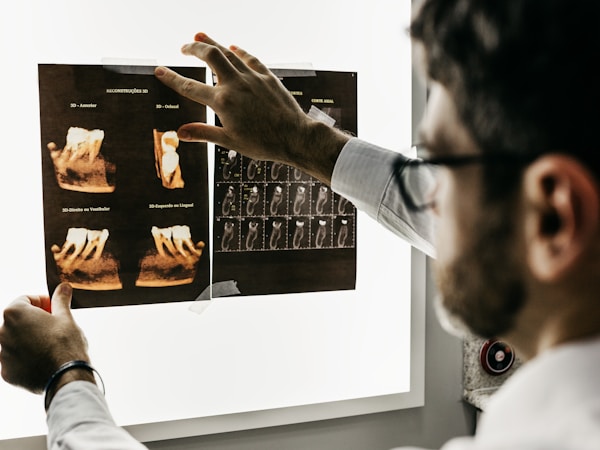
Unlike the surgical obturator, which is fabricated from pre-surgical anatomy, the interim obturator is built from impressions taken of the actual post-surgical defect. This allows Dr. Goetz to design a prosthesis that fits the real wound geometry, provides better retention, and can be relined or modified as healing continues. The interim obturator is the workhorse of the obturator pathway, worn for months, modified multiple times, and supporting function throughout the most intensive phase of cancer treatment.
The interim obturator closes the communication between the oral and nasal cavities left by the surgical resection. This separation is essential for swallowing, without it, food and liquid enter the nasal cavity, and for speech, where the oral-nasal barrier is required to produce most consonants. Even as the defect shape changes during healing, the interim obturator maintains this closure through periodic relining that keeps it fitted to the changing tissue.
Patients wearing an interim obturator are often simultaneously undergoing radiation therapy or chemotherapy. The interim obturator must remain functional and wearable throughout that period, meaning it needs to be comfortable, easy to clean, and stable enough not to interfere with treatment positioning. Dr. Goetz schedules regular follow-up appointments throughout the treatment period to monitor fit, reline as needed, and address any sore spots or retention issues before they become significant problems.
As the post-surgical defect changes shape, through tissue contraction, radiation-related changes, and progressive healing, the interim obturator must be updated to maintain an accurate fit. Relining involves adding new acrylic to the tissue-bearing surface of the prosthesis to fill the gaps that form as the defect contracts. Some interim obturators are relined multiple times over the course of treatment. When changes are too extensive for a reline, Dr. Goetz fabricates a new interim obturator from updated impressions.
The interim obturator is worn until the defect has fully stabilized, typically several months after the completion of all cancer treatment, including radiation. Once tissue changes are no longer occurring and the defect has reached a stable shape, Dr. Goetz begins planning the definitive obturator, a final, precision-fitted prosthesis designed for long-term wear with optimized retention, comfort, and appearance.

The interim phase of obturator rehabilitation requires a clinician who can assess a changing defect, reline an existing prosthesis accurately, and judge when the tissue has stabilized enough to move to definitive planning. Dr. Nicholas Goetz completed his Maxillofacial Prosthodontics Fellowship at UCLA, where managing patients through all three phases of obturator rehabilitation is a central component of the training curriculum.
Dr. Goetz holds a DMD and MS from the University of Florida, where he completed his Prosthodontic Residency. He is one of approximately 150 maxillofacial prosthodontists in the United States, with clinical experience at U.S. Army and VA Medical Hospital settings treating complex head and neck cancer rehabilitation cases. For Boynton Beach patients in the interim obturator phase, that background means each relining appointment and each fit assessment is being made by a specialist trained specifically for this work.
We believe financial concerns shouldn’t keep you from treatment that can change your daily life. Ocean Breeze Implant Aesthetic Dentistry offers flexible financing options so the path to a complete smile feels manageable from the very first visit.
While we are not in-network with insurance companies, we’ll still help you get the most out of your plan. We file claims on your behalf and assist you in securing any reimbursement your PPO plan allows.

An interim obturator is introduced within one to two weeks of surgery, once surgical packing has been removed and impressions of the actual defect can be taken. It replaces the surgical obturator that was placed in the operating room and provides a better-fitted prosthesis for the healing and treatment phase that follows.
The interim obturator is worn throughout the healing period and cancer treatment, typically several months to a year or more, depending on how quickly the defect stabilizes and whether radiation or additional treatment continues. It is modified by relining throughout that period and eventually replaced by a definitive obturator once tissue has fully stabilized.
Yes. As the post-surgical defect contracts and changes shape during healing and radiation, the interim obturator progressively loses fit. Relining, adding new acrylic to the tissue surface of the prosthesis, restores the fit without fabricating an entirely new prosthesis. Some interim obturators require relining multiple times before the defect stabilizes enough to proceed to a definitive prosthesis.
Yes. The interim obturator can generally be worn during radiation therapy, though the exact protocol depends on your radiation oncologist’s recommendations. Dr. Goetz coordinates with your radiation team to ensure the prosthesis does not interfere with treatment positioning and that any necessary modifications are made before each phase of radiation begins.
Interim obturators are typically covered under medical insurance as part of cancer treatment and reconstruction. Submit to both your dental and medical plans. Ocean Breeze Implant Aesthetic Dentistry is a fee-for-service practice and participates as an out-of-network provider with PPO plans, our team files claims on your behalf. Flexible financing options are also available.
Dr. Goetz is one of approximately 150 maxillofacial prosthodontists in the United States and provides the full obturator pathway, surgical, interim, and definitive, at our Boynton Beach office. If you have recently had oral cancer surgery and are ready to transition from a surgical obturator or have not yet received prosthetic care, contact us to schedule your interim obturator appointment.
Schedule your consultation at our Boynton Beach office today, or call (561) 265-1998 to speak with our team.
Se Habla Español · Falamos Português
**Requested time is not final until you receive confirmation from our office. Please do not submit any Protected Health Information (PHI).
"*" indicates required fields