
When head and neck cancer requires radiation therapy, the structures of the mouth — the tongue, soft palate, salivary glands, jawbone, and teeth — are at risk from incidental exposure even when they are not part of the target field. A radiation therapy stent is a custom-fabricated oral device worn during each treatment session to reposition or shield these structures, reducing the dose they receive and lowering the severity of long-term side effects. At Ocean Breeze Prosthodontics in Boynton Beach, Dr. Nicholas Goetz designs and fabricates radiation stents as a fellowship-trained maxillofacial prosthodontist, one of approximately 150 in the United States with this credential.

A radiation therapy stent is a custom-fabricated oral device worn by a patient during each session of head and neck radiation therapy. Its purpose is to reposition the tongue, mandible, or other oral structures away from the radiation beam path, or to physically shield adjacent tissues from scatter radiation \u2014 reducing the incidental dose received by uninvolved structures during each treatment fraction.
The clinical evidence supporting radiation stent use in head and neck oncology is well established. Research published in the International Journal of Radiation Oncology demonstrates that custom oral stents can meaningfully reduce dose to the tongue, mandible, and contralateral salivary glands during oropharyngeal and oral cavity radiation. At Ocean Breeze Prosthodontics, Dr. Goetz fabricates radiation stents in coordination with each patient’s radiation oncology team, designing the device to the specific repositioning or shielding requirements of the treatment plan.
Porcelain veneers are thin ceramic shells — typically 0.3 to 0.5mm — custom-fabricated to bond to the visible front surface of a tooth. They are a minimally invasive solution for patients who want to improve appearance without significant tooth reduction. The porcelain material resists staining, reflects light naturally, and integrates with surrounding teeth in a way that composite alternatives cannot replicate long-term.
Veneers are well-suited for correcting a wide range of cosmetic concerns, including tooth discoloration that doesn’t respond to whitening, chips or cracks affecting the front teeth, minor gaps between teeth, teeth that appear uneven in length or shape, and worn enamel that has changed the look of your smile. According to the American Dental Association, candidates should have good underlying gum health and sufficient enamel before placement — Dr. Goetz evaluates both before recommending any veneer treatment.
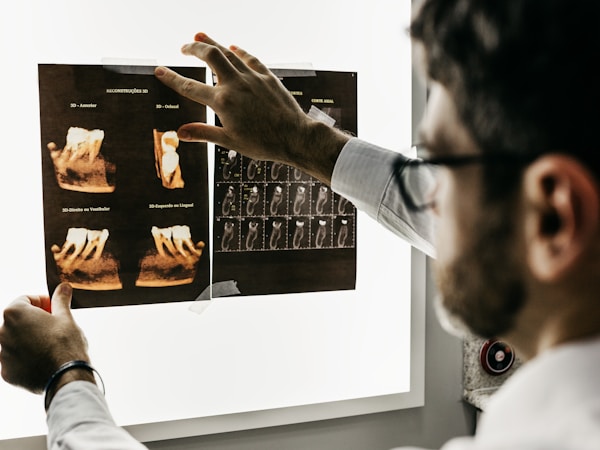
The specific type of stent required depends on the tumor location, the radiation field, and the structures that need to be displaced or shielded. Dr. Goetz works with your radiation oncologist to review the treatment plan before designing the stent, ensuring the device achieves the necessary repositioning or shielding while remaining comfortable to wear throughout each treatment session.
Tongue depressor stents hold the tongue in a specific position during radiation to the floor of the mouth, oropharynx, or tongue base — moving it out of the primary radiation field or into a more consistent position that reduces treatment variability session to session. These stents are fabricated from acrylic or thermoplastic materials and custom-fitted to the patient’s dentition for stable, repeatable positioning.
Positioning stents place the mandible, maxilla, or soft tissue structures in a consistent, reproducible orientation during radiation delivery — ensuring that each treatment fraction targets the same geometry and that uninvolved structures are displaced as far as possible from the beam path. These devices are particularly useful when the tumor is adjacent to critical structures such as the spinal cord, brainstem, or salivary glands.
Shielding stents incorporate lead or other radiation-attenuating materials to physically block scatter radiation from reaching adjacent structures. They are used when positioning alone is insufficient to protect a critical structure — for example, shielding the mandible when radiation targets the floor of the mouth, or protecting the lips and cheek mucosa during superficial lesion treatment. The shielding material is custom-configured to the patient’s anatomy and the treatment geometry.
A radiation stent is only effective if it is designed in coordination with the radiation oncology team’s treatment plan. Dr. Goetz reviews the planned radiation fields and dose distribution with your radiation oncologist before fabricating any stent, ensuring the device achieves the repositioning or shielding that the treatment geometry requires. The stent is tested for fit before radiation begins and verified to seat consistently at each session.

Radiation stent fabrication sits at the intersection of prosthodontics and radiation oncology. Dr. Nicholas Goetz completed his Maxillofacial Prosthodontics Fellowship at UCLA, where radiation stent fabrication for head and neck cancer patients is part of the clinical training alongside obturators, facial prosthetics, and full cancer rehabilitation pathways.
Dr. Goetz holds a DMD and MS from the University of Florida, where he completed his Prosthodontic Residency. He is one of approximately 150 board-certified maxillofacial prosthodontists in the United States, with clinical experience at U.S. Army and VA Medical Hospital settings where head and neck cancer patients received comprehensive prosthodontic care throughout treatment. For Boynton Beach patients beginning radiation therapy, that background means the stent is designed by a clinician trained for this specific role in the cancer care team.
We believe financial concerns shouldn’t keep you from treatment that can change your daily life. Ocean Breeze Prosthodontics offers flexible financing options so the path to a complete smile feels manageable from the very first visit.
While we are not in-network with insurance companies, we’ll still help you get the most out of your plan. We file claims on your behalf and assist you in securing any reimbursement your PPO plan allows.

Not every head and neck cancer patient requires a radiation stent. The need depends on tumor location, the planned radiation field, and whether repositioning or shielding uninvolved structures would meaningfully reduce their exposure. Your radiation oncologist and Dr. Goetz together determine whether a stent is warranted based on the treatment plan. Patients whose radiation fields pass near the tongue, mandible, salivary glands, or other critical oral structures are the most likely candidates.
Radiation stents reduce the dose received by uninvolved structures such as the tongue, mandible, salivary glands, and mucosal lining during each treatment fraction. Lower incidental dose to these structures can reduce the severity of acute side effects including mucositis, and long-term effects including xerostomia, osteoradionecrosis risk, and radiation-induced dental decay. The extent of benefit depends on the tumor location and how much displacement or shielding the stent achieves.
The stent consultation and fabrication should occur before radiation simulation if possible — typically two to four weeks before radiation begins. Early involvement allows the stent to be incorporated into the simulation setup so the treatment plan accounts for the repositioning it achieves. If radiation has already been planned without a stent, Dr. Goetz works with your oncology team to determine whether a stent can still be incorporated into the remaining treatment course.
Radiation stents are typically covered under medical insurance as a component of cancer treatment. Submit to both your dental and medical plans. Ocean Breeze Prosthodontics is a fee-for-service practice and participates as an out-of-network provider with PPO plans — our team files claims on your behalf. Flexible financing options are also available.
Yes. Dr. Goetz works directly with your radiation oncologist and the radiation therapy team to ensure the stent achieves the positioning or shielding the treatment plan requires. If your oncology care is based outside Palm Beach County, Dr. Goetz can communicate with your radiation team remotely and fabricate the stent at our Boynton Beach office before your treatment begins.
Dr. Goetz is one of approximately 150 board-certified maxillofacial prosthodontists in the United States — a specialist whose UCLA fellowship training specifically included radiation stent fabrication as part of comprehensive head and neck cancer care. If you or a patient is scheduled for head and neck radiation and has not yet been referred to a maxillofacial prosthodontist, contact us as early as possible in the treatment planning process.
Schedule your consultation at our Boynton Beach office today, or call (561) 265-1998 to speak with our team.
**Requested time is not final until you receive confirmation from our office. Please do not submit any Protected Health Information (PHI).
"*" indicates required fields