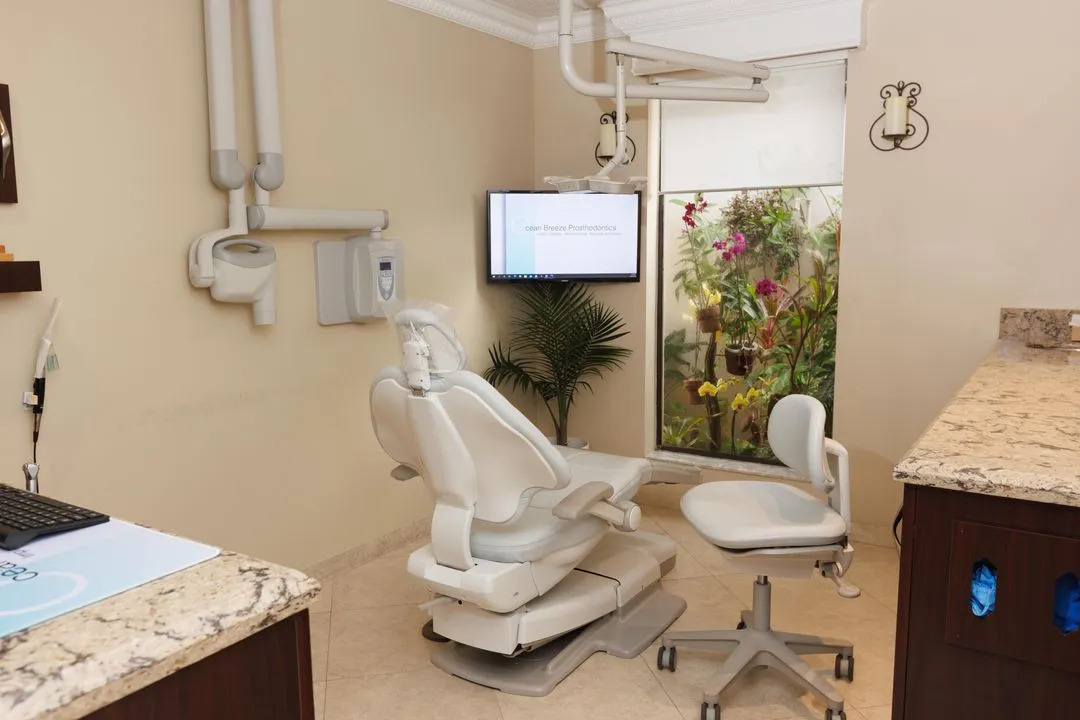
A dental checkup right after the holidays matters because the stretch between Thanksgiving and New Year’s is one of the hardest few weeks on your mouth all year, and problems from that stretch rarely announce themselves until a dentist actually looks. Grinding from holiday stress, sugar from parties and travel, and skipped flossing while your routine was upside down all build quietly, and catching them in January is far simpler than catching them in June.
At Ocean Breeze Implant & Esthetic Dentistry, a post-holiday visit is one of our busiest weeks of the year, and for good reason. Our dental checkups and exams are built to catch exactly the kind of damage the holiday season tends to leave behind, before a small issue turns into a bigger one.
What the Holiday Season Does to Your Teeth
After the holidays, we start with the molars. The chewing surfaces flatten out with stress grinding, and the cusp tips chip. A lot of patients have no idea they grind until we show them a photo of what their molars looked like at the last cleaning compared to what they look like now. A stressful December accelerates it.
The other thing we check for is early decay from the sugar exposure that runs from Halloween through New Year’s. From November through January, patients are eating and drinking things they do not touch the rest of the year, including hard candies, colas, holiday baked goods, and more wine and cocktails than usual. X-rays show the early softening before we can see it in the mouth. Caught at this stage, it is a small filling. Left until summer, it can turn into something bigger.
Holiday travel adds another layer every year. Patients who normally brush twice a day get inconsistent, and flossing disappears for two weeks at a time. The tartar buildup by January reflects it. A cleaning in January stops that buildup at around four months of accumulation, while waiting until June turns it into eight or nine.
How Often You Actually Need a Dental Checkup
Most patients ask us this question directly: how often do you really need to come in? The American Dental Association points out that there is no single fixed interval that applies to everyone. Twice a year is the general starting point for most healthy adults, but the right frequency depends on your individual risk profile, not a one-size-fits-all rule.
Patients with a history of gum disease, frequent cavities, dry mouth, diabetes, or a smoking habit typically benefit from more frequent visits, sometimes every three to four months. Patients with consistently healthy checkups and low decay risk may do fine on a longer interval. A post-holiday visit is a natural checkpoint to have that conversation, since it lands close to the six-month mark for most patients who were last seen over the summer.
What a Post-Holiday Dental Exam Covers
A post-holiday dental exam runs the same course as any general dentistry visit, but we are looking specifically at what the season tends to aggravate. We check the molars for flat spots and the front teeth for chipping along the edges. We look at the gum tissue for inflammation that built up after the October cleaning and did not resolve on its own, and we review X-rays for early softening that has not yet reached the surface.
When we find a crack, we address it before it splits further. A crack that gets a crown now is a much simpler case than one that reaches the nerve by spring.
Professional Cleaning and Fluoride After the Holidays
Removing Built-Up Tartar
The tartar that built up over the fall needs to come off. Home brushing keeps up with fresh plaque, but it does not touch calcified deposits, which require the instruments we use during a professional cleaning. Less accumulation means less work to remove and a cleaner baseline for the rest of the year.
Fluoride for Increased Sensitivity
We also apply fluoride treatments for patients coming in after a season of above-normal acid exposure. Patients with cold sensitivity or visible erosion at the gumline typically get fluoride at every visit going forward, not only after the holidays.
Signs You Should Not Wait for Your Next Cleaning
Some symptoms are worth a call before your next scheduled visit, whatever time of year it happens to be. A few signs to watch for:
- Ongoing sensitivity: Cold or sweet sensitivity that lingers for more than a few seconds after eating or drinking can point to early decay or a cracked tooth that needs attention.
- Gum bleeding or swelling: Gums that bleed regularly during brushing, or that look puffy and red, often signal inflammation that a cleaning alone may not resolve.
- A chip or rough edge: A chipped cusp or a rough spot you can feel with your tongue is worth checking before it catches on food or grows into a larger fracture.
None of these signs are emergencies on their own, but waiting months to have them evaluated tends to turn a small fix into a bigger one.
Planning Your Dental Care for the New Year
The January visit is a practical time to plan the rest of the year. If you have been thinking about a crown, veneers, or whitening, we can walk through the timeline and schedule around what works for you. Some patients have dental benefits that reset in January, and the ones who plan at the January visit tend to actually use those benefits before December comes around again.
If you have been thinking about cosmetic dentistry, the start of the year is a natural time to start that conversation. We can look at the current state of your teeth and work out a realistic timeline together.
Schedule Your Post-Holiday Checkup at Ocean Breeze
Dr. Nicholas Goetz is a fellowship-trained maxillofacial prosthodontist with training from UCLA, and Dr. Katie Gavalas sees patients alongside him, with one appointment running at a time so your visit does not feel rushed. That combination gives our Delray Beach office the ability to handle routine checkups and complex restorative cases under one roof.
If you are overdue for a checkup or noticed something during the holidays that has not resolved, contact us to schedule at our Delray Beach office.
Frequently Asked Questions About Post-Holiday Dental Checkups
How soon after the holidays should I schedule a dental checkup?
Early to mid January is ideal, while the effects of holiday sugar, grinding, and inconsistent brushing are still recent. Scheduling then lets your dentist catch early decay and gum inflammation before summer, when several months of buildup can turn a small filling into a larger procedure. If you already have symptoms such as sensitivity or a chip, do not wait for a specific week. Call as soon as you notice a change.
Can holiday sugar and drinks really cause cavities that fast?
A single holiday season will not cause a cavity on its own, but the combination of hard candies, baked goods, and extra wine or cocktails over several weeks increases acid exposure on your teeth. Repeated exposure without a break can begin softening enamel within weeks, and that softening shows up on X-rays before it is visible or painful. A post-holiday exam catches it at the earliest, most treatable stage.
Do I need a cleaning if I do not have pain or visible problems?
Yes. Tartar and early decay rarely cause pain until they have progressed, which is exactly why routine cleanings matter even when your mouth feels fine. A professional cleaning removes calcified buildup that a toothbrush cannot reach, and the exam that comes with it can catch small issues, such as early gum inflammation, long before they become noticeable or uncomfortable.
How often does the American Dental Association recommend dental checkups?
The American Dental Association recommends dental visits at intervals set by your own dentist rather than a single number for every patient. Twice a year is a reasonable starting point for most healthy adults, but patients with a history of gum disease, frequent cavities, dry mouth, or certain health conditions often benefit from more frequent visits, while lower-risk patients may need less.
What should I do if I chipped a tooth over the holidays?
A chip is worth having evaluated even if it does not hurt. A small chip can often be smoothed or repaired with a simple filling, but left alone, it can catch on food, worsen with normal chewing, or eventually reach the nerve. Schedule an exam so we can assess the depth of the chip and recommend the least invasive fix.